How did Roman aqueducts carry water across valleys?
Roman builders crossed valleys with bridges like the Pont du Gard or pipes that carried water downhill and back up the far slope.
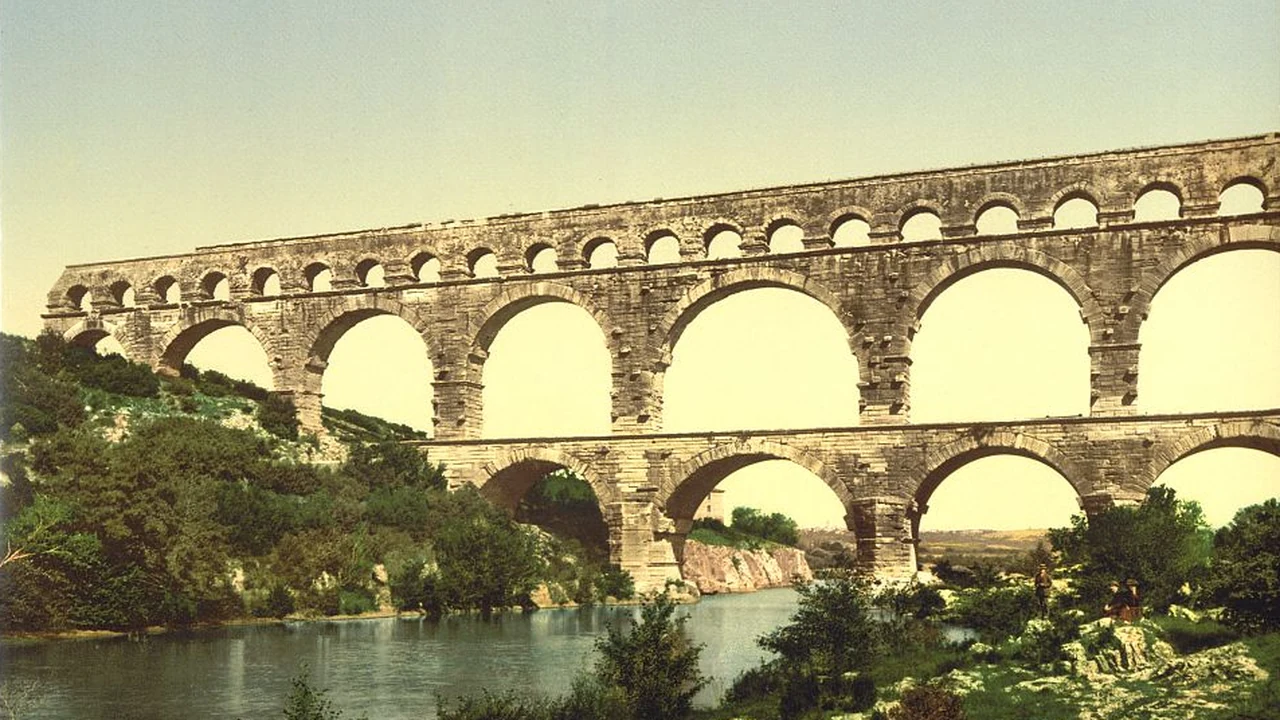
Gravity moved water along a gently sloping channel. To get across a valley, Roman builders could support the channel on a bridge or send the water down and back up through pipes.
A bridge kept the channel high
At the Pont du Gard in southern France, three tiers of stone arches carried the aqueduct channel above the Gardon River. The channel ran along the top tier. On the roughly 50-kilometer route to Nîmes, the channel fell about 25 centimeters per kilometer on average.
The Library of Congress Photochrom Print Collection holds this view of the bridge, made around 1890 to 1900.
Pipes could carry water back uphill
The Gier aqueduct near Lyon used an inverted siphon. Water entered pipes from a tank high on one side, went down into the valley and rose under pressure to a lower tank on the far side. The difference in height between the tanks drove the flow.
The Ancient History quiz asks what Roman aqueducts were built to carry.
Play Ancient History trivia