What is the difference between a crater and a caldera?
How volcanic craters and calderas form, and why Oregon’s Crater Lake sits in a caldera.
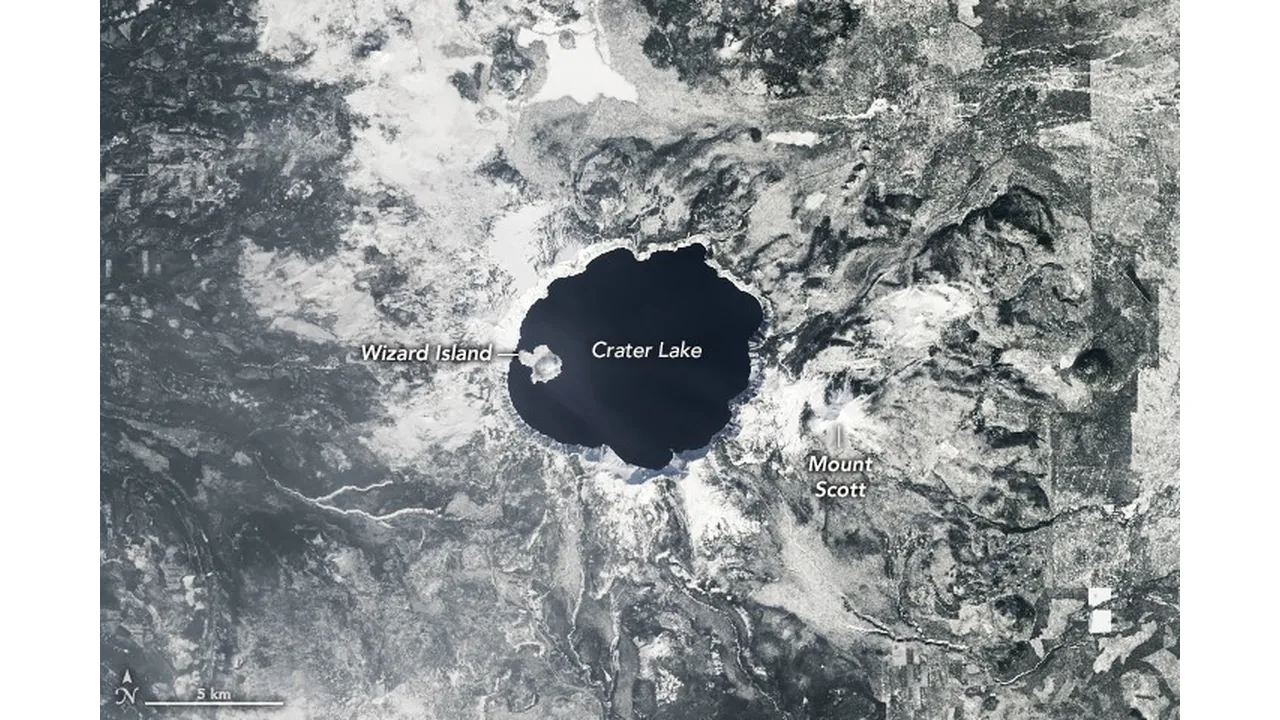
A volcanic crater is usually a bowl around a vent. A caldera is a kind of crater that forms when a large area of ground collapses after magma moves out from beneath it.
How the depressions form
An explosion can blast a crater out of the rock around a vent. A caldera forms when enough magma leaves an underground reservoir that the rock above loses support and sinks. Calderas are generally much larger than vent craters.
Why Crater Lake sits in a caldera
Mount Mazama in what is now Oregon erupted about 7,700 years ago. As magma erupted, the center of the volcano collapsed. Rain and melting snow later collected in that basin to form Crater Lake.
Image credit
Allison Nussbaum, NASA Earth Observatory, using Landsat 8 data from the U.S. Geological Survey.
The free Volcanoes game covers volcano types and eruptions.
Play Volcanoes trivia