What is an index fossil?
How geologists use ammonite fossils to match rock layers that formed during the same span of time.
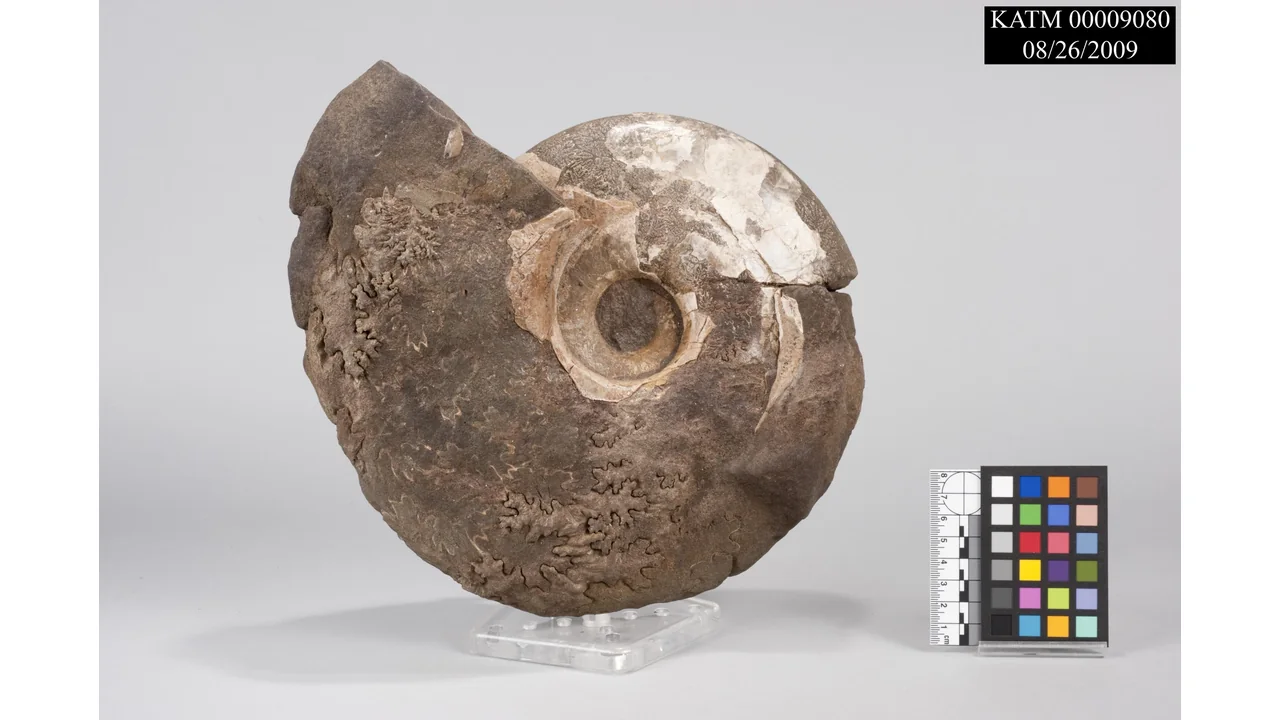
An index fossil helps geologists place a rock layer in geologic time. A species that existed for a short span across a wide area makes a useful marker.
How the same fossil can link two layers
If rocks at two distant sites contain fossils of the same index species, geologists can place both layers in the interval when that species lived. The layers can have formed at different points within that interval. A shorter time range narrows the estimate.
What an ammonite shell can tell you
Ammonites were marine mollusks related to squid and octopuses. Scientists use details such as the shape of the coil and the surface markings to tell species apart. Those details can be enough to identify a species even when only a piece of its shell remains.
Image credit
National Park Service photograph of Pachydiscus kamishakensis from the Kaguyak Formation.
The free Fossils game covers preserved remains and periods in Earth’s history.
Play Fossils trivia